I've had this blog for nearly five years, and like many would-be bloggers, I've found my contributions become ever less frequent. This is largely a function of personal time, energy, and interest, but it also reflects the blog's lack of a clear identity. At first, I thought I'd write regularly about my travels and adventurers as a bicyclist. But while my enthusiasm for cycling hasn't waned, it has become much more narrowly channeled into my daily bike commute. While I've occasionally had reason to post about that commute here, there really is only so much one can say about the same stretch of road ridden day after day after day. If my bicycling adventures ever get more, umm, adventurous, then I'll be sure to post my tales here.
I have also posted here in the past some short pieces I've written originally for the students in one of my Geography classes at Santa Monica College. I've done this whenever I've written something that I thought might be of broader interest. Such is the case today, and I've decided to present it as the first of a new, occasional series on this blog I'm calling "From the Classroom".
Yesterday in my Introduction to Physical Geography class, I briefly covered the topic of air pollution. Following the lead of the really superb textbook I use in that class--Robert Chistopherson's Geosystems--I made a point to emphasize the profound progress made in the United States since the passage of the first Clean Air Act in 1970. As if on cue, today's New York Times included an article discussing proposed new air-pollution standards by the U.S. government. I shared a link to the article with my students, along with the following thoughts
--
Note how today's debate continues to center around economic estimates: the billions of dollars it will cost government and industry to comply with the new standards and the billions of dollars--perhaps fewer, perhaps more--that society promises to save through improved public health. As a map accompanying the article shows, this is particularly significant for California (not just metro LA), where most of the counties already fail to meet current standards, making new stricter standards even more challenging and expensive to satisfy.
The new standards being proposed concern ozone. While this is the same three-oxygen-atom compound we discussed yesterday in class with respect to CFCs and the stratosphere, the ozone issue here is a different one. Up in the stratosphere, ozone is our "friend" as it protects us from UV radiation, and the concern is that human activity is causing a decrease in ozone, way up there. This air-pollution article, however, discusses ozone near the ground, at the bottom of the troposphere, where just the opposite situation is at play. Ozone down here is our "enemy", a harmful, unhealthful pollutant that human activity is causing to increase, hence the desire for government regulations to place an upper limit on its allowable concentration.
Ground-level ozone is one of the most significant components of "smog". It is formed in the atmosphere, especially on warm, sunny, calm days, which allow photochemical (i.e., sunlight-driven) reactions to create ozone out of various industrial emissions such as hydrocarbons and nitrogen oxides. Ozone is a major concern because it's a very powerful oxidant which works an awful lot like household bleach, killing living cells (including skin cells and those that line our lungs) on contact. As a former high-school cross-country runner who grew up in the "smog belt" of the Pomona Valley during the early 1980s, I can personally testify to just how painfully searing within one's chest outdoor exercise often could be back then. Sometimes I'm amazed that I can still breathe at all today, given the torture through which my coaches and I put my young body. The resilience of youth, I suppose.
Ozone similarly harms other living things in our environment, and can damage rubber and plastics as well. Through a chain of connections, this amplifies the full impact and cost of air pollution. For example, several decades of 20th-century air pollution have significantly contributed to the severe wildfire hazard in the mountains around Southern California. Always prone to fire, our forests today are even more so because they include large stands of dry, dying trees suffering from a major bark-beetle infestation. This may seem like an unfortunate "natural" event, but one of the reasons why the bark beetles have been able to thrive is that otherwise healthy trees were weakened by all the ozone pollution. (Drought and artificial fire suppression are additional significant factors.)
While continuing to sound the alarm about air pollution, we do also need to appreciate the phenomenal progress that we have already made. Yes, much of California continues to fall short of the current federal standard (ozone concentrations of no more than 0.075 parts per million), let alone the newly proposed stricter standards. But it's also worth mentioning how far we've come in the last few decades, despite the region's continuing economic and demographic growth. Within the Los Angeles basin, for example, there were 121 days in 1977 during which a "Stage 1 Smog Alert" was declared, which means local ozone levels on those days were greater than 0.20 PPM--nearly three times the current federal standard. Thanks largely to cleaner-burning automobiles, the number of Stage 1 alerts dropped to 66 in 1987, and to only 1 in all of 1997. There have been none since. We also haven't had a "Stage 2" alert (> 0.35 PPM) since 1988; that's a remarkable accomplishment. While getting a "smog check" done on your car can certainly be annoying, and it also adds to the expense of ownership and operation, keep in mind the benefits we enjoy every day through our radically improved air quality. One final set of numbers to share: an average 1965 Chevy Malibu emitted 8.8 grams of hydrocarbons and 3.6 grams of nitrogen oxides every mile; by 2003, a Chevy Malibu emitted only 0.6 and 0.1 grams of each. No wonder our air has gotten so much cleaner.
We still have some days in Southern California when the ozone levels are high enough to detect its distinctive "electrical" or "lightning-y" odor. It's an aroma that doesn't exactly bring back fond memories for me or many other Southern Californians who can remember the bad old days of the previous century.
FYI, in addition to the article in the New York Times, most of the numbers stated above I found through either the FDA's official website on ozone or another helpful one from the State of California.
Friday, January 08, 2010


Friday, June 08, 2007
reason number 42 to bike commute:
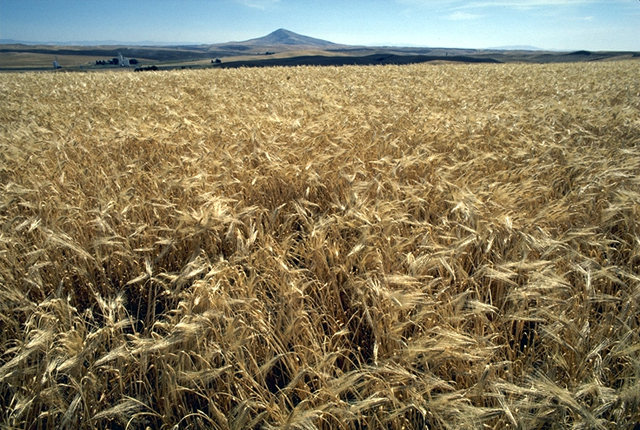 "Biofuels Raise Beer Prices." OK, this headline from ProBrewer.com, is perhaps a little exaggerated, but it nonetheless adds to the growing evidence that the otherwise reasonable push toward alternative fuels--alternative to coal and petroleum--carries its own social and environmental side effects. In this case, it seems European farmers have planted significantly less barley this year as they chase the lucrative subsidies their governments are offering to grow rapeseed (canola) and other raw materials for making biodiesel. With less barley planted, less will be harvested and prices for maltsters and brewers are already on the rise. Besides the economic implications for beer producers and consumers such as myself, there is mounting evidence that the rush to grow other biofuel crops such as maize and, especially, palm oil is having a variety of environmental consequences, with accelerating tropical deforestation topping the list.
While I think biofuels nonetheless offer a lot of potential, let's not forget there is an even better alternative to petroleum-guzzling engines: the human body. We can walk and, of course, bicycle in far more energy-efficient a manner than we can drive, with absolutely no worrisome side effects to deal with--other than helping fight obesity, stress, etc., and living happier, healthier lives as a result. Why is it we so often search for new technologies and techniques to fix our current problems, when sometimes the simplest ideas, such as conservation, provide the most elegant solutions of all.
"Biofuels Raise Beer Prices." OK, this headline from ProBrewer.com, is perhaps a little exaggerated, but it nonetheless adds to the growing evidence that the otherwise reasonable push toward alternative fuels--alternative to coal and petroleum--carries its own social and environmental side effects. In this case, it seems European farmers have planted significantly less barley this year as they chase the lucrative subsidies their governments are offering to grow rapeseed (canola) and other raw materials for making biodiesel. With less barley planted, less will be harvested and prices for maltsters and brewers are already on the rise. Besides the economic implications for beer producers and consumers such as myself, there is mounting evidence that the rush to grow other biofuel crops such as maize and, especially, palm oil is having a variety of environmental consequences, with accelerating tropical deforestation topping the list.
While I think biofuels nonetheless offer a lot of potential, let's not forget there is an even better alternative to petroleum-guzzling engines: the human body. We can walk and, of course, bicycle in far more energy-efficient a manner than we can drive, with absolutely no worrisome side effects to deal with--other than helping fight obesity, stress, etc., and living happier, healthier lives as a result. Why is it we so often search for new technologies and techniques to fix our current problems, when sometimes the simplest ideas, such as conservation, provide the most elegant solutions of all.
Wednesday, June 06, 2007
stay off the sidewalk
Once again, a major media story portrays urban cycling as dangerous and cyclists as hapless victims of a car-driving society that treats them as second-class citizens. This time, it's the Chicago Sun-Times reporting--under the headline "Vicious Cycle"--that a "war" is brewing between cyclists and pedestrians near that city's Northside lakefront. Last month, Alderman Mary Ann Smith led the restoration of an expired 2002 ordinance that fines adult cyclists $250 for riding on the sidewalks lining Sheridan Avenue between the lakeshore campus of Loyola University and the northern end of Lakeshore Drive. Apparently, we're supposed to be outraged by this allegedly bike-unfriendly action because, in the words of author Monifa Thomas, "You'd face a lighter fine if you drove your car on a Chicago sidewalk."
 Now, I have no idea if that statement is true, and if it is, Alderman Smith needs to get seriously busy on revising at least one more city ordinance. But back to the point: Bicycles don't belong on the sidewalk! Especially if it's a pedestrian-crowded sidewalk in a dense urban environment. Bicycles are vehicles, and bicyclists are most certainly not wheeled pedestrians. Like cars, trucks, and motorcycles, bicycles belong both legally and practically on the street. Unfortunately, it seems that neophytes such as those pictured at right--a wannabe Euro jersey and no helmet?!--are allowed to speak for all cyclists in complaining that the new law reduces their safety, when any experienced urban cyclist knows that just the opposite is true. Sure, this statement smacks of elitism, but it's an elitism rooted in years of humble and continuing instruction and training, not a sense of naive entitlement.
To be fair, the Sun-Times article does include some voices of reason. Most notably Rob Sandowsky, executive director of the Chicagoland Bicycle Federation, points out that alternative street routes exist just a block or two away from the lakefront route in question. Perhaps the city could do more to advertise these alternatives via signs, and perhaps the city could improve the bike-friendliness of Sheridan by enforcing speed limits and marking the right lane with "sharrows". But it's still up to bicyclists to educate themselves and learn how to ride their freakin' bikes! Riding safely, comfortably, confidently, and efficiently, alongside of motorized traffic isn't hard, nor is it limited to the "strong and brave"; it just takes a little practice and a humble willingness to learn. And if one is ever not comfortable riding on a particular street, there are always alternative street routes that are far safer than the sidewalk, which study after study demonstrates is the absolutely most dangerous place to ride.
To that end, another recent news item is more constructive. A personal-health feature in the New York Times this week, provides a nice summary of guidelines for both drivers and cyclists in learning how to share the road. And while the article starts out in the common sensationalist style of anecdotally describing a bicycle accident or two, followed by statistics that overstate the dangers of urban cycling because they fail to acknowledge the equivalent dangers of driving an automobile--or to standardize the data in any sort of way (per capita? per mile? per hour?)--at least the article carries the more rational and helpful headline that "Cars and Bikes Can Mix." Of course they can.
If you want to learn more about bicycle education, a great place to start is the League of American Bicyclists. I also highly recommend the "effective cycling" program of bicycle transportation engineer John Forester and the phenomenal website of the late Ken Kifer. The fact that Ken was killed in 2003 while riding his bike should in no way dampen his message as to the safety of cycling; he was tragically and unluckily struck by an obscenely drunk driver, a criminal who just as easily could have taken the life of a fellow motorist or pedestrian as that of a man on a bicycle. In recognizing the non-zero, but still quite small, risks of cycling, we must also acknowledge the comparable risks of the alternatives, especially the daily carnage that occurs within motor vehicles. No user of the streets, regardless of how many wheels they have under them, is completely safe. But fortunately, we're all extremely safe, especially when we know what we're doing.
Now, I have no idea if that statement is true, and if it is, Alderman Smith needs to get seriously busy on revising at least one more city ordinance. But back to the point: Bicycles don't belong on the sidewalk! Especially if it's a pedestrian-crowded sidewalk in a dense urban environment. Bicycles are vehicles, and bicyclists are most certainly not wheeled pedestrians. Like cars, trucks, and motorcycles, bicycles belong both legally and practically on the street. Unfortunately, it seems that neophytes such as those pictured at right--a wannabe Euro jersey and no helmet?!--are allowed to speak for all cyclists in complaining that the new law reduces their safety, when any experienced urban cyclist knows that just the opposite is true. Sure, this statement smacks of elitism, but it's an elitism rooted in years of humble and continuing instruction and training, not a sense of naive entitlement.
To be fair, the Sun-Times article does include some voices of reason. Most notably Rob Sandowsky, executive director of the Chicagoland Bicycle Federation, points out that alternative street routes exist just a block or two away from the lakefront route in question. Perhaps the city could do more to advertise these alternatives via signs, and perhaps the city could improve the bike-friendliness of Sheridan by enforcing speed limits and marking the right lane with "sharrows". But it's still up to bicyclists to educate themselves and learn how to ride their freakin' bikes! Riding safely, comfortably, confidently, and efficiently, alongside of motorized traffic isn't hard, nor is it limited to the "strong and brave"; it just takes a little practice and a humble willingness to learn. And if one is ever not comfortable riding on a particular street, there are always alternative street routes that are far safer than the sidewalk, which study after study demonstrates is the absolutely most dangerous place to ride.
To that end, another recent news item is more constructive. A personal-health feature in the New York Times this week, provides a nice summary of guidelines for both drivers and cyclists in learning how to share the road. And while the article starts out in the common sensationalist style of anecdotally describing a bicycle accident or two, followed by statistics that overstate the dangers of urban cycling because they fail to acknowledge the equivalent dangers of driving an automobile--or to standardize the data in any sort of way (per capita? per mile? per hour?)--at least the article carries the more rational and helpful headline that "Cars and Bikes Can Mix." Of course they can.
If you want to learn more about bicycle education, a great place to start is the League of American Bicyclists. I also highly recommend the "effective cycling" program of bicycle transportation engineer John Forester and the phenomenal website of the late Ken Kifer. The fact that Ken was killed in 2003 while riding his bike should in no way dampen his message as to the safety of cycling; he was tragically and unluckily struck by an obscenely drunk driver, a criminal who just as easily could have taken the life of a fellow motorist or pedestrian as that of a man on a bicycle. In recognizing the non-zero, but still quite small, risks of cycling, we must also acknowledge the comparable risks of the alternatives, especially the daily carnage that occurs within motor vehicles. No user of the streets, regardless of how many wheels they have under them, is completely safe. But fortunately, we're all extremely safe, especially when we know what we're doing.
Now, I have no idea if that statement is true, and if it is, Alderman Smith needs to get seriously busy on revising at least one more city ordinance. But back to the point: Bicycles don't belong on the sidewalk! Especially if it's a pedestrian-crowded sidewalk in a dense urban environment. Bicycles are vehicles, and bicyclists are most certainly not wheeled pedestrians. Like cars, trucks, and motorcycles, bicycles belong both legally and practically on the street. Unfortunately, it seems that neophytes such as those pictured at right--a wannabe Euro jersey and no helmet?!--are allowed to speak for all cyclists in complaining that the new law reduces their safety, when any experienced urban cyclist knows that just the opposite is true. Sure, this statement smacks of elitism, but it's an elitism rooted in years of humble and continuing instruction and training, not a sense of naive entitlement.
To be fair, the Sun-Times article does include some voices of reason. Most notably Rob Sandowsky, executive director of the Chicagoland Bicycle Federation, points out that alternative street routes exist just a block or two away from the lakefront route in question. Perhaps the city could do more to advertise these alternatives via signs, and perhaps the city could improve the bike-friendliness of Sheridan by enforcing speed limits and marking the right lane with "sharrows". But it's still up to bicyclists to educate themselves and learn how to ride their freakin' bikes! Riding safely, comfortably, confidently, and efficiently, alongside of motorized traffic isn't hard, nor is it limited to the "strong and brave"; it just takes a little practice and a humble willingness to learn. And if one is ever not comfortable riding on a particular street, there are always alternative street routes that are far safer than the sidewalk, which study after study demonstrates is the absolutely most dangerous place to ride.
To that end, another recent news item is more constructive. A personal-health feature in the New York Times this week, provides a nice summary of guidelines for both drivers and cyclists in learning how to share the road. And while the article starts out in the common sensationalist style of anecdotally describing a bicycle accident or two, followed by statistics that overstate the dangers of urban cycling because they fail to acknowledge the equivalent dangers of driving an automobile--or to standardize the data in any sort of way (per capita? per mile? per hour?)--at least the article carries the more rational and helpful headline that "Cars and Bikes Can Mix." Of course they can.
If you want to learn more about bicycle education, a great place to start is the League of American Bicyclists. I also highly recommend the "effective cycling" program of bicycle transportation engineer John Forester and the phenomenal website of the late Ken Kifer. The fact that Ken was killed in 2003 while riding his bike should in no way dampen his message as to the safety of cycling; he was tragically and unluckily struck by an obscenely drunk driver, a criminal who just as easily could have taken the life of a fellow motorist or pedestrian as that of a man on a bicycle. In recognizing the non-zero, but still quite small, risks of cycling, we must also acknowledge the comparable risks of the alternatives, especially the daily carnage that occurs within motor vehicles. No user of the streets, regardless of how many wheels they have under them, is completely safe. But fortunately, we're all extremely safe, especially when we know what we're doing.
Wednesday, May 30, 2007
reason number 97 to bike commute ...
 ... (at least in L.A.): serendipitous celebrity sightings. Yesterday, on my ride home through Playa del Rey, I did my usual scan for hazards while crossing through the intersection of Pershing and Manchester and spotted the unmistakable figure of Kareem Abdul-Jabbar, waiting, on foot, to cross Manchester to apparently drop off some dry cleaning. Who said, "Nobody walks in L.A.?" Freakin' Kareem does!
This sighting comes only about a month after seeing former U.S. soccer star and current L.A. Galaxy General Manager Alexi Lalas walking his dog early one morning just a few blocks south of the same spot. But for me the biggest highlight came earlier this year when I saw none other than Larry David holding court with about a dozen hangers-on outside Chaya restaurant on Main Street in Venice/Ocean Park. Since I saw filming-location signs for "CYE" just down the street a few days later, they must have been in the neighborhood scoping things out for the next season of Curb Your Enthusiasm. I briefly thought about yelling something stupid like, "Hey, Larry, You're the Man!," as I rode past. But besides thinking I'm too cool to do something like that--but apparently not too cool to blog about it--I was quite legitimately afraid of what he might have yelled back!
... (at least in L.A.): serendipitous celebrity sightings. Yesterday, on my ride home through Playa del Rey, I did my usual scan for hazards while crossing through the intersection of Pershing and Manchester and spotted the unmistakable figure of Kareem Abdul-Jabbar, waiting, on foot, to cross Manchester to apparently drop off some dry cleaning. Who said, "Nobody walks in L.A.?" Freakin' Kareem does!
This sighting comes only about a month after seeing former U.S. soccer star and current L.A. Galaxy General Manager Alexi Lalas walking his dog early one morning just a few blocks south of the same spot. But for me the biggest highlight came earlier this year when I saw none other than Larry David holding court with about a dozen hangers-on outside Chaya restaurant on Main Street in Venice/Ocean Park. Since I saw filming-location signs for "CYE" just down the street a few days later, they must have been in the neighborhood scoping things out for the next season of Curb Your Enthusiasm. I briefly thought about yelling something stupid like, "Hey, Larry, You're the Man!," as I rode past. But besides thinking I'm too cool to do something like that--but apparently not too cool to blog about it--I was quite legitimately afraid of what he might have yelled back!
 None of this really matters, except to point out how much more attuned to the surrounding landscape one is when passing through on bike, rather than tucked away in the cocoon of an automobile. And with the Culver City model-train store now closed, perhaps bike commuting is the new best place to catch your favorite celebrity on the westside.
Monday, December 25, 2006
you know you're old when ...
... you find this short piece by novelist Michael Laser ridiculously funny. It's a middle-aged person's addendum to the language of text messaging. One suggested addition to his list that I have is: WDISGHT (When Did I Start Growing Hair There?). It would seem to naturally follow Laser's own WROMH (Where's the Rest of My Hair?).
MXFLA (Merry Xmas from L.A.)
Subscribe to:
Posts (Atom)