I've had this blog for nearly five years, and like many would-be bloggers, I've found my contributions become ever less frequent. This is largely a function of personal time, energy, and interest, but it also reflects the blog's lack of a clear identity. At first, I thought I'd write regularly about my travels and adventurers as a bicyclist. But while my enthusiasm for cycling hasn't waned, it has become much more narrowly channeled into my daily bike commute. While I've occasionally had reason to post about that commute here, there really is only so much one can say about the same stretch of road ridden day after day after day. If my bicycling adventures ever get more, umm, adventurous, then I'll be sure to post my tales here.
I have also posted here in the past some short pieces I've written originally for the students in one of my Geography classes at Santa Monica College. I've done this whenever I've written something that I thought might be of broader interest. Such is the case today, and I've decided to present it as the first of a new, occasional series on this blog I'm calling "From the Classroom".
Yesterday in my Introduction to Physical Geography class, I briefly covered the topic of air pollution. Following the lead of the really superb textbook I use in that class--Robert Chistopherson's Geosystems--I made a point to emphasize the profound progress made in the United States since the passage of the first Clean Air Act in 1970. As if on cue, today's New York Times included an article discussing proposed new air-pollution standards by the U.S. government. I shared a link to the article with my students, along with the following thoughts
--
Note how today's debate continues to center around economic estimates: the billions of dollars it will cost government and industry to comply with the new standards and the billions of dollars--perhaps fewer, perhaps more--that society promises to save through improved public health. As a map accompanying the article shows, this is particularly significant for California (not just metro LA), where most of the counties already fail to meet current standards, making new stricter standards even more challenging and expensive to satisfy.
The new standards being proposed concern ozone. While this is the same three-oxygen-atom compound we discussed yesterday in class with respect to CFCs and the stratosphere, the ozone issue here is a different one. Up in the stratosphere, ozone is our "friend" as it protects us from UV radiation, and the concern is that human activity is causing a decrease in ozone, way up there. This air-pollution article, however, discusses ozone near the ground, at the bottom of the troposphere, where just the opposite situation is at play. Ozone down here is our "enemy", a harmful, unhealthful pollutant that human activity is causing to increase, hence the desire for government regulations to place an upper limit on its allowable concentration.
Ground-level ozone is one of the most significant components of "smog". It is formed in the atmosphere, especially on warm, sunny, calm days, which allow photochemical (i.e., sunlight-driven) reactions to create ozone out of various industrial emissions such as hydrocarbons and nitrogen oxides. Ozone is a major concern because it's a very powerful oxidant which works an awful lot like household bleach, killing living cells (including skin cells and those that line our lungs) on contact. As a former high-school cross-country runner who grew up in the "smog belt" of the Pomona Valley during the early 1980s, I can personally testify to just how painfully searing within one's chest outdoor exercise often could be back then. Sometimes I'm amazed that I can still breathe at all today, given the torture through which my coaches and I put my young body. The resilience of youth, I suppose.
Ozone similarly harms other living things in our environment, and can damage rubber and plastics as well. Through a chain of connections, this amplifies the full impact and cost of air pollution. For example, several decades of 20th-century air pollution have significantly contributed to the severe wildfire hazard in the mountains around Southern California. Always prone to fire, our forests today are even more so because they include large stands of dry, dying trees suffering from a major bark-beetle infestation. This may seem like an unfortunate "natural" event, but one of the reasons why the bark beetles have been able to thrive is that otherwise healthy trees were weakened by all the ozone pollution. (Drought and artificial fire suppression are additional significant factors.)
While continuing to sound the alarm about air pollution, we do also need to appreciate the phenomenal progress that we have already made. Yes, much of California continues to fall short of the current federal standard (ozone concentrations of no more than 0.075 parts per million), let alone the newly proposed stricter standards. But it's also worth mentioning how far we've come in the last few decades, despite the region's continuing economic and demographic growth. Within the Los Angeles basin, for example, there were 121 days in 1977 during which a "Stage 1 Smog Alert" was declared, which means local ozone levels on those days were greater than 0.20 PPM--nearly three times the current federal standard. Thanks largely to cleaner-burning automobiles, the number of Stage 1 alerts dropped to 66 in 1987, and to only 1 in all of 1997. There have been none since. We also haven't had a "Stage 2" alert (> 0.35 PPM) since 1988; that's a remarkable accomplishment. While getting a "smog check" done on your car can certainly be annoying, and it also adds to the expense of ownership and operation, keep in mind the benefits we enjoy every day through our radically improved air quality. One final set of numbers to share: an average 1965 Chevy Malibu emitted 8.8 grams of hydrocarbons and 3.6 grams of nitrogen oxides every mile; by 2003, a Chevy Malibu emitted only 0.6 and 0.1 grams of each. No wonder our air has gotten so much cleaner.
We still have some days in Southern California when the ozone levels are high enough to detect its distinctive "electrical" or "lightning-y" odor. It's an aroma that doesn't exactly bring back fond memories for me or many other Southern Californians who can remember the bad old days of the previous century.
FYI, in addition to the article in the New York Times, most of the numbers stated above I found through either the FDA's official website on ozone or another helpful one from the State of California.
Friday, January 08, 2010


Friday, June 08, 2007
reason number 42 to bike commute:
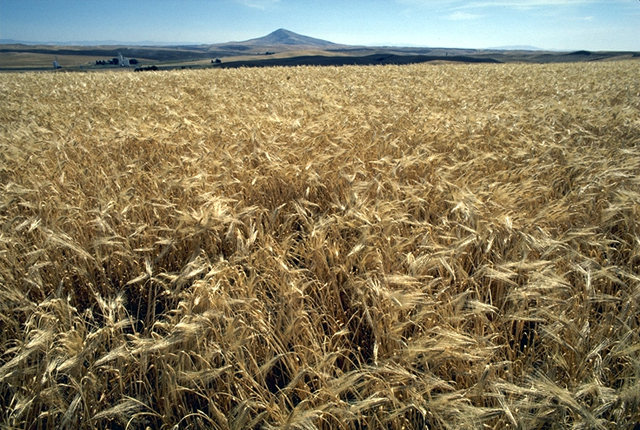 "Biofuels Raise Beer Prices." OK, this headline from ProBrewer.com, is perhaps a little exaggerated, but it nonetheless adds to the growing evidence that the otherwise reasonable push toward alternative fuels--alternative to coal and petroleum--carries its own social and environmental side effects. In this case, it seems European farmers have planted significantly less barley this year as they chase the lucrative subsidies their governments are offering to grow rapeseed (canola) and other raw materials for making biodiesel. With less barley planted, less will be harvested and prices for maltsters and brewers are already on the rise. Besides the economic implications for beer producers and consumers such as myself, there is mounting evidence that the rush to grow other biofuel crops such as maize and, especially, palm oil is having a variety of environmental consequences, with accelerating tropical deforestation topping the list.
While I think biofuels nonetheless offer a lot of potential, let's not forget there is an even better alternative to petroleum-guzzling engines: the human body. We can walk and, of course, bicycle in far more energy-efficient a manner than we can drive, with absolutely no worrisome side effects to deal with--other than helping fight obesity, stress, etc., and living happier, healthier lives as a result. Why is it we so often search for new technologies and techniques to fix our current problems, when sometimes the simplest ideas, such as conservation, provide the most elegant solutions of all.
"Biofuels Raise Beer Prices." OK, this headline from ProBrewer.com, is perhaps a little exaggerated, but it nonetheless adds to the growing evidence that the otherwise reasonable push toward alternative fuels--alternative to coal and petroleum--carries its own social and environmental side effects. In this case, it seems European farmers have planted significantly less barley this year as they chase the lucrative subsidies their governments are offering to grow rapeseed (canola) and other raw materials for making biodiesel. With less barley planted, less will be harvested and prices for maltsters and brewers are already on the rise. Besides the economic implications for beer producers and consumers such as myself, there is mounting evidence that the rush to grow other biofuel crops such as maize and, especially, palm oil is having a variety of environmental consequences, with accelerating tropical deforestation topping the list.
While I think biofuels nonetheless offer a lot of potential, let's not forget there is an even better alternative to petroleum-guzzling engines: the human body. We can walk and, of course, bicycle in far more energy-efficient a manner than we can drive, with absolutely no worrisome side effects to deal with--other than helping fight obesity, stress, etc., and living happier, healthier lives as a result. Why is it we so often search for new technologies and techniques to fix our current problems, when sometimes the simplest ideas, such as conservation, provide the most elegant solutions of all.
Wednesday, June 06, 2007
stay off the sidewalk
Once again, a major media story portrays urban cycling as dangerous and cyclists as hapless victims of a car-driving society that treats them as second-class citizens. This time, it's the Chicago Sun-Times reporting--under the headline "Vicious Cycle"--that a "war" is brewing between cyclists and pedestrians near that city's Northside lakefront. Last month, Alderman Mary Ann Smith led the restoration of an expired 2002 ordinance that fines adult cyclists $250 for riding on the sidewalks lining Sheridan Avenue between the lakeshore campus of Loyola University and the northern end of Lakeshore Drive. Apparently, we're supposed to be outraged by this allegedly bike-unfriendly action because, in the words of author Monifa Thomas, "You'd face a lighter fine if you drove your car on a Chicago sidewalk."
 Now, I have no idea if that statement is true, and if it is, Alderman Smith needs to get seriously busy on revising at least one more city ordinance. But back to the point: Bicycles don't belong on the sidewalk! Especially if it's a pedestrian-crowded sidewalk in a dense urban environment. Bicycles are vehicles, and bicyclists are most certainly not wheeled pedestrians. Like cars, trucks, and motorcycles, bicycles belong both legally and practically on the street. Unfortunately, it seems that neophytes such as those pictured at right--a wannabe Euro jersey and no helmet?!--are allowed to speak for all cyclists in complaining that the new law reduces their safety, when any experienced urban cyclist knows that just the opposite is true. Sure, this statement smacks of elitism, but it's an elitism rooted in years of humble and continuing instruction and training, not a sense of naive entitlement.
To be fair, the Sun-Times article does include some voices of reason. Most notably Rob Sandowsky, executive director of the Chicagoland Bicycle Federation, points out that alternative street routes exist just a block or two away from the lakefront route in question. Perhaps the city could do more to advertise these alternatives via signs, and perhaps the city could improve the bike-friendliness of Sheridan by enforcing speed limits and marking the right lane with "sharrows". But it's still up to bicyclists to educate themselves and learn how to ride their freakin' bikes! Riding safely, comfortably, confidently, and efficiently, alongside of motorized traffic isn't hard, nor is it limited to the "strong and brave"; it just takes a little practice and a humble willingness to learn. And if one is ever not comfortable riding on a particular street, there are always alternative street routes that are far safer than the sidewalk, which study after study demonstrates is the absolutely most dangerous place to ride.
To that end, another recent news item is more constructive. A personal-health feature in the New York Times this week, provides a nice summary of guidelines for both drivers and cyclists in learning how to share the road. And while the article starts out in the common sensationalist style of anecdotally describing a bicycle accident or two, followed by statistics that overstate the dangers of urban cycling because they fail to acknowledge the equivalent dangers of driving an automobile--or to standardize the data in any sort of way (per capita? per mile? per hour?)--at least the article carries the more rational and helpful headline that "Cars and Bikes Can Mix." Of course they can.
If you want to learn more about bicycle education, a great place to start is the League of American Bicyclists. I also highly recommend the "effective cycling" program of bicycle transportation engineer John Forester and the phenomenal website of the late Ken Kifer. The fact that Ken was killed in 2003 while riding his bike should in no way dampen his message as to the safety of cycling; he was tragically and unluckily struck by an obscenely drunk driver, a criminal who just as easily could have taken the life of a fellow motorist or pedestrian as that of a man on a bicycle. In recognizing the non-zero, but still quite small, risks of cycling, we must also acknowledge the comparable risks of the alternatives, especially the daily carnage that occurs within motor vehicles. No user of the streets, regardless of how many wheels they have under them, is completely safe. But fortunately, we're all extremely safe, especially when we know what we're doing.
Now, I have no idea if that statement is true, and if it is, Alderman Smith needs to get seriously busy on revising at least one more city ordinance. But back to the point: Bicycles don't belong on the sidewalk! Especially if it's a pedestrian-crowded sidewalk in a dense urban environment. Bicycles are vehicles, and bicyclists are most certainly not wheeled pedestrians. Like cars, trucks, and motorcycles, bicycles belong both legally and practically on the street. Unfortunately, it seems that neophytes such as those pictured at right--a wannabe Euro jersey and no helmet?!--are allowed to speak for all cyclists in complaining that the new law reduces their safety, when any experienced urban cyclist knows that just the opposite is true. Sure, this statement smacks of elitism, but it's an elitism rooted in years of humble and continuing instruction and training, not a sense of naive entitlement.
To be fair, the Sun-Times article does include some voices of reason. Most notably Rob Sandowsky, executive director of the Chicagoland Bicycle Federation, points out that alternative street routes exist just a block or two away from the lakefront route in question. Perhaps the city could do more to advertise these alternatives via signs, and perhaps the city could improve the bike-friendliness of Sheridan by enforcing speed limits and marking the right lane with "sharrows". But it's still up to bicyclists to educate themselves and learn how to ride their freakin' bikes! Riding safely, comfortably, confidently, and efficiently, alongside of motorized traffic isn't hard, nor is it limited to the "strong and brave"; it just takes a little practice and a humble willingness to learn. And if one is ever not comfortable riding on a particular street, there are always alternative street routes that are far safer than the sidewalk, which study after study demonstrates is the absolutely most dangerous place to ride.
To that end, another recent news item is more constructive. A personal-health feature in the New York Times this week, provides a nice summary of guidelines for both drivers and cyclists in learning how to share the road. And while the article starts out in the common sensationalist style of anecdotally describing a bicycle accident or two, followed by statistics that overstate the dangers of urban cycling because they fail to acknowledge the equivalent dangers of driving an automobile--or to standardize the data in any sort of way (per capita? per mile? per hour?)--at least the article carries the more rational and helpful headline that "Cars and Bikes Can Mix." Of course they can.
If you want to learn more about bicycle education, a great place to start is the League of American Bicyclists. I also highly recommend the "effective cycling" program of bicycle transportation engineer John Forester and the phenomenal website of the late Ken Kifer. The fact that Ken was killed in 2003 while riding his bike should in no way dampen his message as to the safety of cycling; he was tragically and unluckily struck by an obscenely drunk driver, a criminal who just as easily could have taken the life of a fellow motorist or pedestrian as that of a man on a bicycle. In recognizing the non-zero, but still quite small, risks of cycling, we must also acknowledge the comparable risks of the alternatives, especially the daily carnage that occurs within motor vehicles. No user of the streets, regardless of how many wheels they have under them, is completely safe. But fortunately, we're all extremely safe, especially when we know what we're doing.
Now, I have no idea if that statement is true, and if it is, Alderman Smith needs to get seriously busy on revising at least one more city ordinance. But back to the point: Bicycles don't belong on the sidewalk! Especially if it's a pedestrian-crowded sidewalk in a dense urban environment. Bicycles are vehicles, and bicyclists are most certainly not wheeled pedestrians. Like cars, trucks, and motorcycles, bicycles belong both legally and practically on the street. Unfortunately, it seems that neophytes such as those pictured at right--a wannabe Euro jersey and no helmet?!--are allowed to speak for all cyclists in complaining that the new law reduces their safety, when any experienced urban cyclist knows that just the opposite is true. Sure, this statement smacks of elitism, but it's an elitism rooted in years of humble and continuing instruction and training, not a sense of naive entitlement.
To be fair, the Sun-Times article does include some voices of reason. Most notably Rob Sandowsky, executive director of the Chicagoland Bicycle Federation, points out that alternative street routes exist just a block or two away from the lakefront route in question. Perhaps the city could do more to advertise these alternatives via signs, and perhaps the city could improve the bike-friendliness of Sheridan by enforcing speed limits and marking the right lane with "sharrows". But it's still up to bicyclists to educate themselves and learn how to ride their freakin' bikes! Riding safely, comfortably, confidently, and efficiently, alongside of motorized traffic isn't hard, nor is it limited to the "strong and brave"; it just takes a little practice and a humble willingness to learn. And if one is ever not comfortable riding on a particular street, there are always alternative street routes that are far safer than the sidewalk, which study after study demonstrates is the absolutely most dangerous place to ride.
To that end, another recent news item is more constructive. A personal-health feature in the New York Times this week, provides a nice summary of guidelines for both drivers and cyclists in learning how to share the road. And while the article starts out in the common sensationalist style of anecdotally describing a bicycle accident or two, followed by statistics that overstate the dangers of urban cycling because they fail to acknowledge the equivalent dangers of driving an automobile--or to standardize the data in any sort of way (per capita? per mile? per hour?)--at least the article carries the more rational and helpful headline that "Cars and Bikes Can Mix." Of course they can.
If you want to learn more about bicycle education, a great place to start is the League of American Bicyclists. I also highly recommend the "effective cycling" program of bicycle transportation engineer John Forester and the phenomenal website of the late Ken Kifer. The fact that Ken was killed in 2003 while riding his bike should in no way dampen his message as to the safety of cycling; he was tragically and unluckily struck by an obscenely drunk driver, a criminal who just as easily could have taken the life of a fellow motorist or pedestrian as that of a man on a bicycle. In recognizing the non-zero, but still quite small, risks of cycling, we must also acknowledge the comparable risks of the alternatives, especially the daily carnage that occurs within motor vehicles. No user of the streets, regardless of how many wheels they have under them, is completely safe. But fortunately, we're all extremely safe, especially when we know what we're doing.
Wednesday, May 30, 2007
reason number 97 to bike commute ...
 ... (at least in L.A.): serendipitous celebrity sightings. Yesterday, on my ride home through Playa del Rey, I did my usual scan for hazards while crossing through the intersection of Pershing and Manchester and spotted the unmistakable figure of Kareem Abdul-Jabbar, waiting, on foot, to cross Manchester to apparently drop off some dry cleaning. Who said, "Nobody walks in L.A.?" Freakin' Kareem does!
This sighting comes only about a month after seeing former U.S. soccer star and current L.A. Galaxy General Manager Alexi Lalas walking his dog early one morning just a few blocks south of the same spot. But for me the biggest highlight came earlier this year when I saw none other than Larry David holding court with about a dozen hangers-on outside Chaya restaurant on Main Street in Venice/Ocean Park. Since I saw filming-location signs for "CYE" just down the street a few days later, they must have been in the neighborhood scoping things out for the next season of Curb Your Enthusiasm. I briefly thought about yelling something stupid like, "Hey, Larry, You're the Man!," as I rode past. But besides thinking I'm too cool to do something like that--but apparently not too cool to blog about it--I was quite legitimately afraid of what he might have yelled back!
... (at least in L.A.): serendipitous celebrity sightings. Yesterday, on my ride home through Playa del Rey, I did my usual scan for hazards while crossing through the intersection of Pershing and Manchester and spotted the unmistakable figure of Kareem Abdul-Jabbar, waiting, on foot, to cross Manchester to apparently drop off some dry cleaning. Who said, "Nobody walks in L.A.?" Freakin' Kareem does!
This sighting comes only about a month after seeing former U.S. soccer star and current L.A. Galaxy General Manager Alexi Lalas walking his dog early one morning just a few blocks south of the same spot. But for me the biggest highlight came earlier this year when I saw none other than Larry David holding court with about a dozen hangers-on outside Chaya restaurant on Main Street in Venice/Ocean Park. Since I saw filming-location signs for "CYE" just down the street a few days later, they must have been in the neighborhood scoping things out for the next season of Curb Your Enthusiasm. I briefly thought about yelling something stupid like, "Hey, Larry, You're the Man!," as I rode past. But besides thinking I'm too cool to do something like that--but apparently not too cool to blog about it--I was quite legitimately afraid of what he might have yelled back!
 None of this really matters, except to point out how much more attuned to the surrounding landscape one is when passing through on bike, rather than tucked away in the cocoon of an automobile. And with the Culver City model-train store now closed, perhaps bike commuting is the new best place to catch your favorite celebrity on the westside.
Monday, December 25, 2006
you know you're old when ...
... you find this short piece by novelist Michael Laser ridiculously funny. It's a middle-aged person's addendum to the language of text messaging. One suggested addition to his list that I have is: WDISGHT (When Did I Start Growing Hair There?). It would seem to naturally follow Laser's own WROMH (Where's the Rest of My Hair?).
MXFLA (Merry Xmas from L.A.)
Friday, December 15, 2006
beachfront racism along santa monica bay
Another posting today that doesn't involve two wheels. Indeed, it concerns, at least in part, vehicles that have no wheels at all: surfboards. Now, I may be a proud California boy, and I may have spent much of my youth on a Boogie Board, but I'm no surfer. I do live close to the ocean, though, and my daily bike commute--not to mention most of my recreational rides--takes me within earshot of the crashing waves and close enough to taste the saltwater in the air. Plus my grandparents used to live in a condo in Oahu's remote Makaha valley, which just happens to empty onto one of the world's most historic surf sites. Put it all together, and I have a strange fascination for the worlds of surfing, and I thus rank Stacy Peralta's surf-themed documentaries (Dogtown and Z-Boys and Riding Giants) as two of my favorite films.
More than surfing, this post is about local social history and how it is so often hidden in the landscapes we observe today. Given that it regards the modern United States, it's perhaps inevitable that the following introduction to a specific bit of local geography also centers around the concept of race.
==
It goes without saying that racial segregation is a major theme throughout all of the United States, urban as well as rural, and Southern California is certainly no exception. For example, the photo below from the collections at the LA Public Library reminds us that our beaches--among other places and institutions--were once segregated; in this case (ca. 1925), the group is standing next to the sign that marked the edge of "the Inkwell", the Santa Monica beach where Blacks were allowed, in contrast to Whites-Only Venice Beach to the south.
 Rather than near the beach, the centers of "black" Los Angeles have been east of the 405; Crenshaw, Leimert Park, Watts, Compton, Central Avenue, West Adams, Inglewood, are just some of the place names most associated with SoCal black communities of both the past and present. This generalized mental geography that places blacks in an extended "South-Central" zone is largely confirmed by recent Census counts. For example, look at the following map, based on the 1990 data, produced by the geographers at CSUN:
 It thus might come as some surprise that Manhattan Beach (just 0.6% black in 2000) actually has a significant place in the region's Afro-American historical geography. Manhattan Beach's "Parque Culiacan" suggests a link to Mexico (indeed, to Manhattan Beach's first official "sister city" in the 1970s), but the history of this land is more centrally linked to blacks and coastal racial segregation in the early twentieth century. Interestingly, but not surprisingly, this story is not told on the City's official website. (Earlier this year, however, the Manhattan Beach City Council voted to rename the park Bruce's Beach, in recognition of the history below.)
For those interested in the social history of SoCal beaches, particularly in the South Bay, there is no better single source than a fascinating article by CSUN geographer Ronald Davidson, which was published in the 2004 Yearbook of the Association of Pacific Coast Geographers. Here's the quick outline of the story of Parque Culiacan:
It thus might come as some surprise that Manhattan Beach (just 0.6% black in 2000) actually has a significant place in the region's Afro-American historical geography. Manhattan Beach's "Parque Culiacan" suggests a link to Mexico (indeed, to Manhattan Beach's first official "sister city" in the 1970s), but the history of this land is more centrally linked to blacks and coastal racial segregation in the early twentieth century. Interestingly, but not surprisingly, this story is not told on the City's official website. (Earlier this year, however, the Manhattan Beach City Council voted to rename the park Bruce's Beach, in recognition of the history below.)
For those interested in the social history of SoCal beaches, particularly in the South Bay, there is no better single source than a fascinating article by CSUN geographer Ronald Davidson, which was published in the 2004 Yearbook of the Association of Pacific Coast Geographers. Here's the quick outline of the story of Parque Culiacan:
 Rather than near the beach, the centers of "black" Los Angeles have been east of the 405; Crenshaw, Leimert Park, Watts, Compton, Central Avenue, West Adams, Inglewood, are just some of the place names most associated with SoCal black communities of both the past and present. This generalized mental geography that places blacks in an extended "South-Central" zone is largely confirmed by recent Census counts. For example, look at the following map, based on the 1990 data, produced by the geographers at CSUN:
 It thus might come as some surprise that Manhattan Beach (just 0.6% black in 2000) actually has a significant place in the region's Afro-American historical geography. Manhattan Beach's "Parque Culiacan" suggests a link to Mexico (indeed, to Manhattan Beach's first official "sister city" in the 1970s), but the history of this land is more centrally linked to blacks and coastal racial segregation in the early twentieth century. Interestingly, but not surprisingly, this story is not told on the City's official website. (Earlier this year, however, the Manhattan Beach City Council voted to rename the park Bruce's Beach, in recognition of the history below.)
For those interested in the social history of SoCal beaches, particularly in the South Bay, there is no better single source than a fascinating article by CSUN geographer Ronald Davidson, which was published in the 2004 Yearbook of the Association of Pacific Coast Geographers. Here's the quick outline of the story of Parque Culiacan:
It thus might come as some surprise that Manhattan Beach (just 0.6% black in 2000) actually has a significant place in the region's Afro-American historical geography. Manhattan Beach's "Parque Culiacan" suggests a link to Mexico (indeed, to Manhattan Beach's first official "sister city" in the 1970s), but the history of this land is more centrally linked to blacks and coastal racial segregation in the early twentieth century. Interestingly, but not surprisingly, this story is not told on the City's official website. (Earlier this year, however, the Manhattan Beach City Council voted to rename the park Bruce's Beach, in recognition of the history below.)
For those interested in the social history of SoCal beaches, particularly in the South Bay, there is no better single source than a fascinating article by CSUN geographer Ronald Davidson, which was published in the 2004 Yearbook of the Association of Pacific Coast Geographers. Here's the quick outline of the story of Parque Culiacan:
- 1902 - Manhattan Beach emerges as one of many oceanside resort developments on Santa Monica Bay
- 1911 - Standard Oil builds its refinery at El Segundo (the second refinery in California, hence the name), and MB booms as a residential suburb for oil workers
- 1912 - MB codeveloper George Peck progressively sets aside two beachfront blocks for nonwhite (i.e., black) property owners, who were otherwise excluded from owning beachfront property anywhere in Southern California. Willie Bruce and her husband Charles are the first to buy property and they build a small resort for blacks, complete with cafe, dance hall, and fishing pier. This becomes known as Bruces Beach.
- 1924 - After years of racist challenge to the Bruces' existence, including from a local chapter of the KKK, the city of MB uses eminent domain to acquire the property, move all the non-white residents out, in order to presumably build a park. The city's real motivation, though, to "ethnically cleanse" the area became apparent when the park wasn't actually built until the 1950s.
- For more on LA's rich black history, click here.
- Those interested in the challenge of providing public access to our beaches will want to check out this publication from the Surfrider Foundation.
Sunday, December 10, 2006
it's about time
It only took a couple of years, but it's nice to see the media beginning to take notice of the absolute travesty that the WADA-led crusade against athletic doping has become. This includes a rare example in the L.A. Times today--in a story about disgraced American cyclist Tyler Hamilton--of journalism based on actual research, not simply the regurgitation of prepared sound bites. For example, finally we have a reporter who got it right: Olympic gold medalist Hamilton did not test positive during the 2004 Games in Athens; his "A" sample was merely flagged as "suspicious" and his "B" sample was thus destroyed per protocol, not due to some "lab error" that has been mythically reported since Hamilton did test positive in another competition, that Fall's Vuelta a Espana.
Hamilton's case is old news, and I can't honestly claim to know if he was really guilty of blood doping in 2004 or not. But his case, along with so many others in cycling and other sports, demonstrates to me that WADA's "war" against doping has proven as disastrous as the U.S. war against terrorism: well-intentioned efforts to combat a major problem, but efforts undertaken under the "war" metaphor that wind up doing more harm than good, precisely because of the corresponding mindset that we must win the "war" no matter what the costs. Perhaps it's time society reminds itself of every medical student's first lesson: "Primum non nocere (First, do no harm.)" Like many fans around the world, my interest in sport--especially cycling this year--has been severely reduced by the doping scandals. But this has little to do with the drug-taking athletes; I'm far more disgusted by the various authorities who should be governing sport with an even, judicious hand, not the vindictive, capricious witch hunt currently being conducted.
Wednesday, September 27, 2006
subway smells
It goes without saying, especially to blog readers, that the Internet is transforming how we learn about the world. Google, of course, is a major force in this, and from a geographical perspective, both Google Earth and Google Maps are really leading us in new, creative directions. One of the attractions of Google Maps is its openness, its ability to be easily "mashed" together with other sources to create custom maps. For example, I regularly use Google Map mashups to chart out my bike rides and to locate places that sell/serve interesting beer.
One of the dozens (hundreds? thousands?) of Google Maps mashups out there is this interesting map of New York City subway smells. I haven't had a chance to explore it very much, but I love the idea. It reminds us that the cultural landscape--or at least the experienced lived-in environment--is not just visual. Instead, it really is derived from all of our senses, and we not only see our surroundings, we also hear, smell, feel, and sometimes even taste them--both for better and for worse. This is one of the great weaknesses of the landscape concept; it overprivileges the visual at the expense of all the other sensual dimensions to our daily experience.
This raises the question, though, of exactly how do we tell the geography of smells (or tastes, or sounds, or feels)? Maps themselves are visual items, and even a fully multimedia computer is limited to presenting captured visual images and sounds. Scratch-and-sniff maps? "Smell-evision"? Would we even want such a thing if it were feasible? Or are most smells better kept in their place? (This reminds me of an old episode of the '80s sitcom, "Cheers", where Norm, Cliff, Carla, and the gang debated--as only people drinking around a bar can--the "smelliest" movie of all time. I think "Ben Hur" won, and that is definitely a film I'm rather glad to have seen and not smelled!)
Wednesday, May 17, 2006
my bike commute: first-quarter 2006 report
I'm a little late with this report, given that it's already halfway through the second quarter of 2006, but it is National Bike-to-Work Week this week, so maybe the timing is appropriate.
I began regularly bike commuting--and by regularly, I mean at least once a week--last year. It worked so well that I've decided to keep closer tabs this year. So here's the skinny for the first three months of 2006:
- I commuted by bike on 29 of the quarter's 49 teaching days, or 59% of the time, for a total 1371 km and 60 hours.
- 11 of the 20 car-driving days occurred in March, due to injury and/or rain
- Estimated quarterly gas-money savings of about $100. During the first quarter of this year, I purchased only 35.4 gallons (=$93 @ $2.64/g) of gas, compared to 87.5 gallons (=$203 @ $2.32/g) during the first quarter of 2005, when I wasn't bike commuting regularly. That's an apparent year-to-year savings of $110. I figure every bike-commuting day saves me about a gallon of gas. Thus, when bike-commuting 100% of the time, and not just 60%, and with gas prices now well over $3 per gallon, I figure my monthly savings could easily top $50. That's enough to pay for my satellite TV service at home. Add in all the calories I'm buring by riding to work, and that adds up to truly guilt-free couch-potato time.
Monday, May 08, 2006
gustavo arellano on anti-mexican o.c.
I've posted on this blog before my attraction to Orange County--a place I grew up near, a place I enjoy visiting, and a place that thoroughly intrigues me as a geographer. One of my favorite guides to the happenings in OC is Gustavo Arellano, a regular contributor to the OC Weekly and arguably the premier journalist in Southern California on anything having to do with local Mexican-American culture and politics--especially in the present immigrant-bashing climate, which has made Arellano something of a national celebrity, and deservedly so. Today, Arellano has a typically excellent opinion piece in the LA Times, but he is better known for his humorous (in an often off-color, politically incorrect way) "Ask a Mexican" column in the OCW. I can't recommend his writing more highly. Here's a telling excerpt from today's piece, which details the depth of anti-Mexican racism in OC:
I'm a fourth-generation descendant of naranjeros (orange pickers), barely speak Spanish and am lighter-skinned than most of my gabacho friends. Still, a couple of years ago, I attended a fundraiser at the Balboa Bay Club — the Musso & Frank's for O.C.'s old money, and John Wayne's favorite drinking well — and while I was standing in line for a horrid Mexican buffet, a skinny, prissy thing approached. She asked if I could serve her some beans. I laughed. While I waited for the valet later that night, the same woman asked if I could grab her car. "Not unless you want it on cinder blocks," I replied. My Camry arrived. I paid the $5 charge and slipped the Mexican valet an extra $20.By the way, gabacho is just one of many local-Spanish/Spanglish words that one will pick up from reading Arellano's work. Kind of like "gringo", it's Mexican-Spanish slang for an English-speaking "white" person, but it really carries the more specific connotation of a white USAmerican--particularly one with a personal identity and political orientation tied closely to the idea of a monolithic Anglo-American norm, as opposed to a more multicultural orientation, and thus displaying immense historical and geographical ignorance about the diverse and plentiful contributions of brown-skinned, Spanish speakers (not to mention other non-Anglo ethnicities) to USAmerican culture and society. I don't know the full history or etymology of the word, but my understanding is that it derives from centuries-old pejorative slang used in Spain to describe someone from France, in particular peasants in the Pyrenees. Given the history of French occupation of Mexico during the 1860s, it's understandable that the same word would evolve with additional political freight here in the Americas. Another useful source for the ever-evolving worlds of modern slang is the on-line urban dictionary.
Wednesday, May 03, 2006
pete's world cycling rankings, 2006.1
It's the first week of May, which means two things for fans of bicycle road racing. First, it's Giro time! Second, with the spring classics now behind us, and the first quarter of the annual cycling calendar now complete, it's a good time to reflect on the season so far.
I'm going to try something new this year. Rather than the entirely subjective, personal rankings by general impression that I offered last year, I've decided to switch over to a formal points system (see description below). One of the main reasons for doing so is I am shifting my focus from individual rankings to team standings. Cycling remains both an individual and a team sport, and on a race-by-race basis, its individual side clearly stands out; we'll long remember that the last seven Tours de France were won by Lance Armstrong first, and Team US Postal / Discovery Channel a distant second. But especially now that the star riders are becoming ever more specialized and targeted in their personal goals, a season-long points system really only makes sense as a team concept.
So who's winning the 2006 season so far? Here's the Top 20 (and their respective leading scorers), which just so happens to consist of the 20 official ProTour teams:
1. Quick.Step-Innergetic 269 points (Boonen 137)
2. Caisse d'Epargne-Illes Balears 242 (Valverde 180)
3. CSC 221 (Schleck 65, Cancellara 65)
4. Liberty Seguros-Würth Team 199 (Contador 62)
5. Davitamon-Lotto 162 (Evans 71)
6. Rabobank 157 (Freire 48)
7t. Lampre-Fondital 149 (Ballan 53)
7t.Discovery Channel 149 (Hoste 57)
9. Milram 121 (Petacchi 67)
10. Phonak Hearing Systems 104 (Landis 66)
11. Credit Agricole 90 (Hushovd 65)
12. Saunier Duval-Prodir 83 (Gomez 57)
13. Euskaltel-Euskadi 79 (Sanchez 79)
14t. T-Mobile 71 (Sinkewitz 37)
14t. Gerolsteiner 71 (Rebellin 22)
16. Française Des Jeux 56 (Eisel 23)
17. Liquigas 48 (Paolini 15)
18. Cofidis 34 (Bertagnolli 23)
19. Ag2r Prevoyance 27 (Gerrans 15)
20. Bouygues Telecom 26 (Voeckler 18)
QuickStep not only tops the rankings but, by my estimation at least, has been the most consistent and impressive team to date. Not only has world champion Tom Boonen been almost unbeatable all season long, but the team scored a major win with Pippo Pozzato at Sanremo, and Paolo Bettini has been his usual attacking self--and frankly has been rather unlucky not to score a major victory himself. Moreover, QuickStep was one of only five teams to score points in at least half of the 20 races to date, and the only team to score points in as many as 13 races. Moreover, as many as seven different QuickStep riders have earned points, including the three mentioned above who are all in the top 13 riders overall.
After QuickStep, I'd rank CSC as next most impressive, with 9 points-earning riders in 12 different races. Davitamon-Lotto has been similarly consistent (8 different riders earning points in 12 different races), although their fifth-place points total is largely due to their utter dominance of the spring's last event, the Tour de Romandie, which alone earned them 100 cumulative points. The hard-luck team of the year so far has to be Discovery Channel; nine Disco' riders have earned points and nobody was consistently stronger this spring than either Leif Hoste or George Hincapie. But it all fell apart at Paris-Roubaix when Hincapie crashed out and Hoste was denied his podium finish by a questionable disqualification at the now-infamous railroad crossing.
As far as individuals, two riders have separated themselves from the pack. Boonen, as noted above, has been nothing short of phenomenal, even if his official second place at Roubaix was something of a gift. By the end of April, though, it was all about the "green bullet", Alejandro Valverde, who dominated the Ardennes classics--like DiLuca and Rebellin the last two years--and singlehandedly lifted his Illes Balears team into second place. Other noteworthy performers this spring include Euskatel's Samuel Sanchez (no major wins but consistent high results earning him third place overall), CSC's Frank Schleck and Fabian Cancellara, and Phonak's Floyd Landis, who quite simply has won every significant stage race he's entered and has to now be considered a true favorite--alongside Ivan Basso and (maybe) Valverde and Ullrich (?)--for the Tour de France in July.
In the national rankings, Spain and Italy have been dominant. Twenty-nine Spanish riders, led by Valverde, have scored points--nearly a quarter of all the points available (631 out of 2530)--and they have won 4 of the 20 HC and ProTour races to date. The Italian contingent, meanwhile, have managed just a pair of wins but as many as 40 Italian riders have collected a total of 493 points, which is more than twice the total of third-place Belgium (242). Australia (187) and the USA (170) round out the top five. As for France, well, their riders collectively sit in 11th place, behind such powers as Luxembourg and Norway, and four of the five French ProTour teams rank in the bottom five. French pride, what's left of it, is being barely sustained by Credit Agricole in 11th place--a team whose results so far have almost exclusively come from the Norwegian Thor Hushovd. With the Giro dominating the second quarter of the season, it's unlikely that the French riders or teams will make a significant move up the standings anytime soon. Instead, Italy and Spain are likely to extend their dominance at least until the Tour starts in July.
My Points System Explained
Like many other cycling fans, I like the idea of the ProTour and what the UCI is trying to accomplish, but I'm not particularly thrilled by the actual scoring system employed. First, it simply doesn't include enough events, which is why my rankings include the continental "HC" events such as the Tour de Georgia in the USA and Milano-Torino in Italy, as well as the relatively short list of official ProTour races. Second, even after some revision for 2006, I believe the ProTour point system still overemphasizes the GC results of the major stage races and underemphasizes individual stage placings. The third big difference is that my points system gives significantly greater weight to race victories, relative to podium and other high placings, than the UCI's system. For example, while both the UCI and I award 40 points to the winner of Fleche Wallone, I give second and third place only 20 and 15 points respectively compared to the UCI's 30 and 25. Finally, the UCI ranks the Tour de France (100 points to the GC winner) slightly higher than the other two grand tours (85 points), and it likewise awards a few more points (50) to the winners of the "classics" such as Sanremo and Roubaix than to the winners of the semi-classics such as Amstel Gold and Fleche Wallone (40). While I recognize that both the Tour and the old classics carry more prestige among fans and riders alike than the other ProTour events, I also believe a season-long points system should treat races as equally as possible. Just as Formula One awards no more points for winning at Monaco than for winning at, say, Malaysia, I think all comparable ProTour cycling events should be treated as equals, too. A win is a win, no matter how old or steeped in tradition a particular race may be.
Here are the details of my system:
Grand Tours: 100 points to the GC winner, 50 and 35 to second and third, with points available down to 15th place. Stage victories worth 25 points, with points available down to 10th place. And 30 points available to the winners of both the KOM and sprint/points jerseys.
Other ProTour races: 40, 20, and 15 points to the podium finishers of both the one-day races and stage-race GCs. Lesser points available down to 10 places. For the stage races, each stage win is worth 15 points, escalating down to 6 places.
UCI HC races: 10 points to the winner (down to five places) for one-day races and stage-race GCs. 5 points (down to three places) for stage victories.
So, how do my rider rankings compare to the official ProTour rankings, at least so far? No difference at the top, but some pretty significant discrepancies below. Floyd Landis scores higher on my list since I count the Tour de Georgia (but not the Tour of California!), while Michael Boogerd, whose perennial non-winning podium place at Amstel is discounted in my system, stands in only 27th place on my table.
My top 10:
Alejandro Valverde 180
Tom Boonen 137
Samuel Sanchez 79
Cadel Evans 71
Alessandro Petacchi 67
Floyd Landis 66
Thor Hushovd 65
Frank Schleck 65
Fabian Cancellara 65
Alberto Contador Velasco 62
the UCI's top 10:
VALVERDE BELMONTE Alejandro 178
BOONEN Tom 129
BALLAN Alessandro 105
SCHLECK Frank 100
SINKEWITZ Patrik 90
SANCHEZ GONZALEZ Samuel 89
CANCELLARA Fabian 84
BOOGERD Michael 75
PETACCHI Alessandro 72
JAKSCHE Jörg 72
no more excuses: ride your bike!
Steve Lopez demonstrates once again why he is one of my favorite local journalists. Today he reports on a recent westside bike ride--along one of my own usual routes from Santa Monica to Playa del Rey--with former LA mayor Richard Riordan and actor-activist Ed Begley, Jr.. The bottom line: the bicycle really can save us all, and the biggest barrier keeping greater Los Angeles from becoming a cycling mecca is not a lack of facilities (bike lanes and the such) but simply a lack of awareness and determination on the part of the region's residents. The time for excuses is over. Just get on your bike and ride!!
OK, it's not quite that simple, but it is more a personal responsibility than a societal one. While I certainly would welcome more bicycle-friendly facilities--such as the cheap but highly effective "sharrows" idea (website 1, website 2)--there is no reason to allow the status quo to keep you from riding. The trick and the challenge is that you need to appreciate that bicycle riding, particularly alongside traffic on city streets, is very much an art and skill that one needs to consciously develop through study and practice. It is not the case that "once you learn how to ride a bike, you never forget," because none of us ever finish learning how to ride a bike. Be humble and appreciate how you can always become a better (not just fitter) cyclist, and never forget that, on the one hand,
- the roads belong to bicycles no less than cars and you must never shy from asserting your rightful place on the road--you're a human-powered vehicle, not a wheeled pedestrian;
- in a physical confrontation between car and bike, you lose, so temper your assertiveness with proactive, defensive caution.
- Forester's website
- Forester's book
- another highly recommended book (but one I've yet to read)
Sunday, April 30, 2006
another intellectual icon passes
Last week's passing of famed and beloved urbanist Jane Jacobs, whose words and actions will continue to reverberate for many years to come, has been widely discussed. This weekend, we lost another of the 20th century's great writers and thinkers, Berkeley-trained Harvard University economist John Kenneth Galbraith. Professor Galbraith was a gifted and prolific writer and books of his that are decades old remain very worthwhile to read today. For me personally, I began my higher education as an Econ major, not a geographer. There is a very good chance that had the field of Economics remained more "Galbraithian" with a qualitative, historical interest in broad issues of social-political economy, rather than the super-quantified, abstract world of calculus, econometrics, and timeless/placeless "models", I would have remained in Econ.
Anyways, the New York Times today contains a pretty good obituary.
globalization and the two chinas
From the perspective of the United States, circa 2006, the central storyline of the 21st century involves the confrontation between a (mostly) Judeo-Christian, secular-leaning "West", and a less-secular, (mostly) Muslim "Middle East". Keep in mind that this is not a simple "clash of civilizations" but rather a multi-layered and very complicated collection of issues and relationships. Obviously, terrorism/security and oil/energy/environment are at the top of the list.
From a less U.S.-centric point of view, however, I'm inclined to believe that an even bigger storyline will unfold this century: the globalization and urbanization and modernization of China. Already the world's biggest country demographically, its rapid economic growth the last quarter century is fast making it the world's biggest country economically as well. While much of this very old and proud civilization remains quite traditional (which also means rural and not "developed"), and will remain so for a pretty long time, there is another China--mostly urban and on/near the coast--that already belongs firmly to the modern, global world, so much so that it already is largely indistinguishable from the likes of Europe, Japan, or the United States. For a glimpse of this "new" China, check out the following pop-culture, Internet-age phenomenon: the "Back Dorm Boys", who in the last year have become true international celebrities.
Wikipedia Entry
Video #1
Video #2
One final comment: while they initially rose to fame on the strength of the Back Street Boys, thus suggesting that globalization is basically "westernization", their subsequent videos have covered the work of East Asian pop stars. This says to me that in the long run, there will be no single "hearth" of global culture that the rest of the world simply marches behind--not Europe, not the USA. Instead, people all over the globe, as long as they are willing and able to participate, will be both leading and following us in all sorts of new directions. If you're open to diversity and change, this promises to be a very exciting future; if you're more into things staying the same, you're going to have a harder and harder time finding a place of comfort and refuge.
Tuesday, April 04, 2006
bike-friendly amsterdam?
It's a common theme among bike advocates in the U.S. to celebrate Amsterdam, and the Netherlands more generally, as an especially bike-friendly place. If Davis, California, sets the official "platinum" standard here in the states, then Amsterdam--or so the conventional wisdom goes--must be at least double platinum. Amsterdam, after all, is famously home to double-tiered bike racks, a "white bikes" program for borrowing public bicycles a la books in a library, and Velo Mondial, a global organization devoted to promoting a more "bicycle friendly" world. More importantly, it seems--at least to visiting Americans--that everyone rides a bike there, everywhere, and they do so not all kitted out for a weekend club ride but just as a part of their daily routine. The following links are but two recent examples of American visitors enamored with Amsterdam's ubiquitous bike culture:
- an American photographer discussing her new album of everyday Amsterdam on bikes
- an article detailing a Portland, Oregon, delegation's visit last year (and an accompanying blog report)
Monday, March 13, 2006
are you kidding me?
Imagine a super-freeway, an interstate highway wider than a football field is long (end zones included), boasting as many as 23 lanes! Sounds like science fiction, I know, but it's an actual plan for the expansion of I-75 on the northwest periphery of Atlanta--a highway that, at 15 lanes, is already ranked as the widest in the country. The Atlanta Journal-Constitution has the details; you can also read more about the project from the authorities themselves. I don't suppose that any one of those 23 lanes will be reserved for bicycles? Might make an interesting stage for the Ford (formerly Dodge) Tour "de" Georgia. By the way, what is an auto maker doing sponsoring a bike race anyway? At least the Tour of California keeps it in the family by going with EPO-producer Amgen. And Tour de Georgia? Now, Tour de Louisiana or Tour de Quebec, I would understand. Even Tour du Pont was pretty clever. But Georgia was named after British King George II, from the Germanic House of Hanover. Somehow the French "de" just doesn't fit, in the same way that, say, a Tour de Deutschland, Giro di England, or Vuelta a New Hampshire wouldn't work either. Thank you, Tour of California organizers, for having the courage and the common sense to just stick with English.
Monday, March 06, 2006
crash!
No, this is not a post about the recently crowned "best picture of the year". Instead, much for painfully, it's about my bike race on Sunday. Nothing quite like a good crash to begin the new season. Due to luck, conservative riding, and I'd like to think skillful riding, I've avoided racing crashes entirely since my partial return to the sport a few years ago. But that string came to a rude end yesterday morning on Westchester Parkway overlooking the north runways of LAX. Fortunately, the damage to my bike, my clothes, and most importantly, my body were minor. I actually rode home from the bike race!
Some 24 hours later, though, I'm still upset about the incident--both at myself and my fellow crash victims. This particular race is run on a flat, boring 4-mile circuit where the wind and lack of hills almost guarantees a big group finish. Since this was my first race of the year, and I really only wanted to test my legs and refind that elusive racing rhythm--combined with the fact that I'm just not very good, especially in a sprint--I had zero ambition for a high placing. All I wanted to do was finish safely with the group and perhaps help out a teammate or two along the way. Everything went to plan for almost the entire race, but on the last lap, with an antsy pack still chaotically bunched together, it became clear that finish was going to be hairy. Rather than an agressive move, I was trying to stay safe and look for any openings that presented themselves. One such opening kind of emerged on the back straight, and I was able to move up to the middle of the pack rounding the final U-turn. Safely through that, I again cautiously looked for openings, neither sitting up nor truly gearing up a sprint. The pack was spread wide across all three lanes, from curb to curb. Guys were bunching up dangerously on both sides, so I moved to the middle and found a nice cushion of open space.
Then the carnage began. A big crash on the left, and I happily pedalled away from perhaps the worst sound anyone will ever hear short of a true battlefield: aluminum, carbon, lycra, flesh, and pavement, all coming together in a very unsymphonic way. Shortly thereafter, I saw a teammate in my peripheral vision shoved into and over the curb on the right and take a very nasty tumble. With much of the field caught up in the mess or simply choosing to pull up, and no teammates nearby to assist, I decided to continue to ride hard but safely to the finish to perhaps grab a top-20 placing, which by my unambitious standards would be pretty good. No more than 150 meters from the line, though, my "safe" ride came to end. Maybe 5 or 10 meters in front of me, a guy goes down suddenly and hard. I didn't see what happened, but he must have been bumped and just lost control. I only had a split second to react--one of those slow-motion split seconds that you only experience in a time of danger; there was nowhere to go the right, and I sensed (perhaps wrongly) that there was nowhere on the left. Instead, I grabbed the brakes, scrubbed off some speed, and instinctively began my tuck as I plowed into the fallen rider. Then it's just another extended slow-motion moment in my head that is strangely blank and peaceful--no sound, no sight, and despite slamming into the ground, no feeling either--until sitting on the pavement, a couple of feet from my fallen bicycle and at least one other rider also taken down by the same guy, or perhaps by me, reality began to sank in all too quickly. After a brief check of my body (thankfully nothing broken or truly bleeding) and then my bike--only minor damage--anger set in and I start cussing in a brief angry rage that few who know me would ever think was possible. I mean: 150 frickin' meters from the finish, and we're "racing" for at best 20th place. And you let a little bump take you down?! Then again, what was I thinking? While not racing hard, I certainly could have sat up and truly ridden in safely.
Here's the really stupid part: I can't wait to race again. Maybe not next week, or even the week after. But not too much later than that, I know I'll be itchin' to go--hopefully a little wiser for the experience.
Tuesday, February 28, 2006
life on the streets
It certainly has become cliche to bemoan traffic in big-city America, especially metro Los Angeles, where gridlock, "road rage", and just plain idiocy are accepted as the norm. As both a bicyclist and a motorist, I definitely tend to think this way, and recent stories of a spoiled playboy wrapping his million-dollar Ferrari around a telephone pole while doing 160 mph (!) down PCH in Malibu, or miscellaneous drivers plowing into my law-abiding cycling teammates on recent rides only confirms my sense of anarchy on the roads. But the geographer in me knows full well that our roads here in California and the USA are remarkably tame, orderly, and even safe when compared to so many other parts of the world. There was a piece last year in the Atlantic Monthly about Iraq, for example, contrasting the orderly traffic within the American-fortified "Green Zone" with the seemingly lawless jungle on the streets throughout the rest of Baghdad--not even taking roadside bombs into account. Admittedly, that's a special situation. But it really isn't all that exceptional. For example, I received the following tidbit this week in a free e-mail update from The Economist:
The migalka, a flashing blue siren that sits on top of sleek black cars, inspires road rage in even the calmest Moscow driver (of which there are few). Left over from Soviet times, migalkas are seemingly ubiquitous, a symbol of official privilege available to anyone with political connections or very deep pockets. Like the sirens of police cars, migalkas enable drivers to run red lights, rush down the wrong side of the road and even lurch onto sidewalks. Anger about these sirens boiled over in Moscow on February 12th, when 1,000 cars took to the streets in protest, many of them brandishing signs slamming the “hot rods with sirens”.
This ire is justified. In 2005 the governor of the Siberian Altai region was killed in an accident: armed with a migalka, he drove down the wrong side of the road at 200kmph and ran into a car making a left turn. In early February, a court found the other driver guilty of the governor's death, and sentenced him to four years in a labour colony. The verdict caused outrage across the country and inspired the Moscow demonstration. Participants said their action was part of a demand for fairness and equality before the law. Alas, the protest cars quickly got caught in Saturday traffic. Their route was further obstructed by traffic police, stationed every kilometre to break up the convoy.
Stories like these shouldn't keep us from observing and agitating against the very real problems that we face on the streets and highways of California and the USA. But they should at least give us pause for thought to appreciate how good we truly have it. Indeed, given how law- and rule-abiding the vast majority of American motorists are, it's really shameful that we have so far still to go in devising such rules and laws to make our streets safer and more convenient for all of us, no matter what mode of transport we're employing at the time.
Tuesday, December 20, 2005
new family blog
Looking ahead to 2006, I'm going to refine my blogging a little bit. Family-related news and notes will be posted to a new blog (californiamorris.blogspot.com) while this blog will remain--for the time being--a miscellaneous collection of comments and accounts of my life as both a cyclist and teaching geographer. Happy Holidays!
Friday, December 16, 2005
urban blight: a short primer
Widely used for more than half a century in the United States, the term "blight" carries a very loaded set of meanings in the context ofmodern urban planning and design setting--and how we define "blight" lies at the heart of much of the current controversy concerning eminent domain.
The word "blight" stems from Old English origins, where it had the general meaning of a "rust" or a skin disease--the deterioration of something at the surface. This meaning became specifically applied to plants, and the various fungal diseases that didn't just kill the plant but caused its leaves, stems, etc. to become withered or discolored; the most (in)famous of these is the "potato blight" that triggered mass migration of Irish in the 1840s to the United States, Britain, and elsewhere.
Over time, "blight" became used as a general term suggesting the spoilage or destruction of something, typically with the connotation that some sort of metaphorical "disease" was at work, resulting in, among other things, the "uglification" of something. Thus, in an urban area, blight is often taken to mean a "run down" neighborhood or building that has fallen into disuse and dilapidation due to a lack of maintenance. This degradation of the landscape is seen as representing a more profound degradation of the resident society.
So far, so good; kind of like porn, while we might be hard-pressed to define urban blight in words, we certainly know it when we see it. But there's a catch. The Oxford Dictionary of Geography reminds us that in planning circles, "blight" refers to "the reduction of economic activity or property values in a particular area"--especially in terms of commercial activity as opposed to residential properties (where "slum" is the more commonly applied term). This is why the post-1949 shift in focus of urban renewal efforts in the United States away from "slums" to "blight" is significant; urban renewal ever since has been less about low-income housing and more about generating commercial activity and the increased property values and tax revenues that come with that activity. In other words, a planner's "blighted" building or neighborhood is often someone's beloved "home"--not the most prestigious of properties, but not necessarily something the residents perceive to be "run down". That was certainly the case with the plaintiffs in the recent Supreme Court case concerning New London (CT)'s use of eminent domain.
As of yet, Wikipedia does not have an entry on "urban blight", but there is a very good discussion of "urban renewal". Also, you might wish to consult Robert Cowan's Dictionary of Urbanism. I only just now discovered this resource, so I'm not familiar with it. But it does contain an entry on "blight". It seems worth checking out, too.
Subscribe to:
Posts (Atom)